Backup power
The power goes out. Your life doesn't.
18models from EcoFlow, Anker SOLIX, Jackery, Bluetti and DJI. Prices and specs checked on the makers' US sites on .
Disclosure: We may earn a commission if you buy through these links. It never changes our recommendations. How we make money.
about 15 hours
Fridge, Wi-Fi and lights
On our top pick, the EcoFlow DELTA 3 Max
7 nights
Of CPAP
8 hours a night, with a heated humidifier (ResMed figure)
From $299
To get started
The EcoFlow RIVER 3 Plus, when we checked
Our picks, by what you need
Our pick for outage backup
EcoFlow DELTA 3 Max
- Fridge, Wi-Fi and lights: about 15 hours
- Fridge alone: about 18 hours
- CPAP: 7 nights
- Phone charges: about 115
The most battery for the money of any in-stock model we list. Leave the fridge plugged into it all the time: when the power cuts out it takes over in about a hundredth of a second, so the food stays cold and you may not even notice.
Specs
- Capacity
- 2.05 kWh
- Continuous AC output
- 2,400 W
- Surge
- 4,800 W
- Battery chemistry
- LFP (lithium iron phosphate)
- Rated cycles
- Not stated
- Weight
- 44.8 lb
- Expandable
- Not stated
- Max solar input
- 500 W
- Voltage
- 120V
- Installation
- Plug in yourself
- Warranty
- 5 years
Best value · apartments
Anker SOLIX C1000 Gen 2
- Fridge, Wi-Fi and lights: about 8 hours
- Fridge alone: about 9 hours
- CPAP: 3 nights
- Phone charges: about 60
The cheapest full-size unit we found in stock. It refills from the wall in under an hour by Anker's figure and runs whisper-quiet (about 20 dB under light loads), so it suits a bedroom or small apartment. It can't take extra batteries later.
Specs
- Capacity
- 1.02 kWh
- Continuous AC output
- 2,000 W
- Surge
- 3,000 W
- Battery chemistry
- Not stated
- Rated cycles
- 4,000 to 80% capacity
- Weight
- 24.9 lb
- Expandable
- No
- Max solar input
- 600 W
- Voltage
- 120V
- Installation
- Plug in yourself
- Warranty
- Not stated
Best one that can grow
EcoFlow DELTA 3 Plus
- Fridge, Wi-Fi and lights: about 8 hours
- Fridge alone: about 9 hours
- CPAP: 3 nights
- Phone charges: about 60
Start small and add EcoFlow's extra batteries later (up to five times the capacity). Two solar inputs mean a couple of portable panels can refill it in a day, and it switches over fast enough to keep a computer or router running. 5-year warranty.
Specs
- Capacity
- 1.02 kWh
- Continuous AC output
- 1,800 W
- Surge
- 3,600 W
- Battery chemistry
- LFP (lithium iron phosphate)
- Rated cycles
- 4,000 to 80% capacity
- Weight
- 27.6 lb
- Expandable
- Yes, to 5 kWh (with EcoFlow extra batteries (5 kWh needs a DELTA Pro 3 extra battery))
- Max solar input
- 1,000 W
- Voltage
- 120V
- Installation
- Plug in yourself
- Warranty
- 5 years
Best for camping
Jackery Explorer 1000 v2
- Fridge, Wi-Fi and lights: about 8 hours
- Fridge alone: about 9 hours
- CPAP: 4 nights
- Phone charges: about 60
The lightest full-size unit in our table, at 23.8 lb, with long-life LFP cells and up to a 5-year warranty (3 years plus 2 on registration). Enough outlets and solar input for a campsite. Jackery rates its cycles to 70% capacity, a lower bar than rivals' 80%.
Specs
- Capacity
- 1.07 kWh
- Continuous AC output
- 1,500 W
- Surge
- 3,000 W
- Battery chemistry
- LFP (lithium iron phosphate)
- Rated cycles
- 4,000 to 70% capacity
- Weight
- 23.8 lb
- Expandable
- No
- Max solar input
- 400 W
- Voltage
- 120V
- Installation
- Plug in yourself
- Warranty
- 5 years
Best for CPAP and small loads
EcoFlow RIVER 3 Plus
- Fridge, Wi-Fi and lights: about 2 hours
- Fridge alone: about 3 hours
- CPAP: 1 night
- Phone charges: about 15
A 10.4 lb box for $299 that switches over in about 10 ms, so a CPAP keeps running if the power blips. Add EcoFlow's extra battery to triple it. Check your own machine: our CPAP nights assume about 28 W with a heated humidifier, from ResMed's battery guide.
Specs
- Capacity
- 0.29 kWh
- Continuous AC output
- 600 W
- Surge
- 1,200 W
- Battery chemistry
- LFP (lithium iron phosphate)
- Rated cycles
- 3,000 to 80% capacity
- Weight
- 10.4 lb
- Expandable
- Yes, to 0.86 kWh (with RIVER 3 Plus extra batteries)
- Max solar input
- 220 W
- Voltage
- 120V
- Installation
- Plug in yourself
- Warranty
- Not stated
Best for RVs and vans
Anker SOLIX F3000
- Fridge, Wi-Fi and lights: about 23 hours
- Fridge alone: about 27 hours
- CPAP: 11 nights
- Phone charges: about 175
Plugs straight into an RV with a TT-30 outlet that delivers its full output, takes a lot of solar, and grows to four times the capacity with Anker's batteries. At 91.5 lb it rolls rather than carries.
Specs
- Capacity
- 3.07 kWh
- Continuous AC output
- 3,600 W
- Surge
- 7,200 W
- Battery chemistry
- LFP (lithium iron phosphate)
- Rated cycles
- 4,000
- Weight
- 91.5 lb
- Expandable
- Yes, to 12.29 kWh (with up to three BP3000 expansion batteries)
- Max solar input
- 2,400 W
- Voltage
- 120V
- Installation
- Plug in yourself
- Warranty
- Not stated
Best for running home circuits
Anker SOLIX F3800 Plus
- Fridge, Wi-Fi and lights: about 29 hours
- Fridge alone: about 34 hours
- CPAP: 14 nights
- Phone charges: about 220
240-volt power for a well pump or a transfer switch, lots of solar input, and room to grow into whole-home backup. It was $199 cheaper than the EcoFlow DELTA Pro 3 with more output when we checked.
Specs
- Capacity
- 3.84 kWh
- Continuous AC output
- 6,000 W
- Surge
- Not stated
- Battery chemistry
- LFP (lithium iron phosphate)
- Rated cycles
- 3,000
- Weight
- 136.7 lb
- Expandable
- Yes, to 26.88 kWh (with up to six BP3800 expansion batteries)
- Max solar input
- 3,200 W
- Voltage
- 120/240V
- Installation
- Plug in yourself
- Warranty
- 5 years
*Prices and specifications are from each manufacturer's US website, checked . Prices change often, sometimes daily during sales; the seller's page is the final word. Cycle ratings are the maker's own figures, measured to different end points, so treat them as rough guides.
Every model compared (full specs)
Sorted by capacity. Swipe sideways on a phone. "Expands to" uses the maker's own add-on batteries on one unit. A dash means the maker does not publish the figure on its US page.
| Model | Capacity | AC output | Chemistry | Rated cycles | Weight | Expands to | Solar input | Warranty | Price* | $/kWh |
|---|---|---|---|---|---|---|---|---|---|---|
| EcoFlow RIVER 3 Plus (opens in a new tab) | 0.29 kWh | 600 W | LFP | 3,000 | 10.4 lb | 0.86 kWh | 220 W | — | $299 | $1,045 |
| EcoFlow DELTA 3 (opens in a new tab) | 1.02 kWh | 1,800 W | LFP | 4,000 | 27.6 lb | 5 kWh | 500 W | 5 yr | $629list | $614 |
| EcoFlow DELTA 3 Plus (opens in a new tab) | 1.02 kWh | 1,800 W | LFP | 4,000 | 27.6 lb | 5 kWh | 1,000 W | 5 yr | $719list | $702 |
| Anker SOLIX C1000 Gen 2 (opens in a new tab) | 1.02 kWh | 2,000 W | — | 4,000 | 24.9 lb | No | 600 W | — | $549.99list | $537 |
| Bluetti Elite 100 V2 (opens in a new tab) | 1.02 kWh | 1,800 W | LFP | 4,000 | 25 lb | — | 1,000 W | — | $499 | $487 |
| DJI Power 1000 V2 (opens in a new tab) | 1.02 kWh | 2,600 W | LFP | 4,000 | — | 11.26 kWh | — | — | $699 | $683 |
| Jackery Explorer 1000 v2 (opens in a new tab) | 1.07 kWh | 1,500 W | LFP | 4,000 | 23.8 lb | No | 400 W | 5 yr | $559 | $522 |
| Bluetti AC180 (opens in a new tab) | 1.15 kWh | 1,800 W | LFP | 3,500 | 35.3 lb | — | 500 W | 5 yr | $499 | $433 |
| Jackery Explorer 1000 Plus (opens in a new tab) | 1.26 kWh | 2,000 W | LFP | 4,000 | 32 lb | 5.06 kWh | 800 W | 5 yr | $619list | $489 |
| Jackery Explorer 2000 v2 (opens in a new tab) | 2.04 kWh | 2,200 W | LFP | 4,000 | 39.5 lb | No | 400 W | 5 yr | $999 | $489 |
| EcoFlow DELTA 3 Max (opens in a new tab) | 2.05 kWh | 2,400 W | LFP | — | 44.8 lb | — | 500 W | 5 yr | $899list | $439 |
| EcoFlow DELTA 3 Max Plus (opens in a new tab) | 2.05 kWh | 3,000 W | LFP | — | — | 10 kWh | — | 5 yr | $1,199list | $585 |
| Anker SOLIX C2000 Gen 2 (opens in a new tab) | 2.05 kWh | 2,400 W | LFP | 4,000 | 41.7 lb | 4.1 kWh | 800 W | — | $999.99list | $488 |
| Bluetti Elite 200 V2 (opens in a new tab) | 2.07 kWh | 2,600 W | LFP | 6,000 | 53.4 lb | No | 1,000 W | 5 yr | $899 | $434 |
| Anker SOLIX F3000 (opens in a new tab) | 3.07 kWh | 3,600 W | LFP | 4,000 | 91.5 lb | 12.29 kWh | 2,400 W | — | $1,499.99list | $488 |
| Anker SOLIX F3800 Plus (opens in a new tab) | 3.84 kWh | 6,000 W | LFP | 3,000 | 136.7 lb | 26.88 kWh | 3,200 W | 5 yr | $2,599.99list | $677 |
| EcoFlow DELTA Pro 3 (opens in a new tab) | 4.1 kWh | 4,000 W | LFP | 4,000 | 113.54 lb | 12.29 kWh | 2,600 W | 5 yr | $2,799list | $683 |
| Jackery Explorer 5000 Plus (opens in a new tab) | 5.04 kWh | 7,200 W | LFP | 4,000 | 134.5 lb | 60 kWh | — | 5 yr | $3,499 | $694 |
*Prices and specifications are from each manufacturer's US website, checked . Prices change often, sometimes daily during sales; the seller's page is the final word. Cycle ratings are the maker's own figures, measured to different end points, so treat them as rough guides.
Bigger whole-home systems such as the EcoFlow DELTA Pro Ultra, Bluetti Apex 300 and installed batteries are on our home battery backup guide.
Head-to-head comparisons
- EcoFlow DELTA 3 Plus vs Anker SOLIX C1000 Gen 2
- Jackery vs EcoFlow: Which Power Station Brand Is Better?
- Anker SOLIX vs EcoFlow: Power Stations Compared Size for Size
- EcoFlow vs Bluetti: Power Stations Compared Size for Size
- Bluetti AC180 vs Jackery Explorer 1000 v2
- EcoFlow DELTA 3 Max vs Jackery Explorer 2000 v2
- EcoFlow DELTA Pro 3 vs Anker SOLIX F3800 Plus
- Anker SOLIX F3800 Plus vs Jackery Explorer 5000 Plus
- Tesla Powerwall 3 vs Enphase IQ Battery 5P
How we chose
We started from the current US line-ups of the five brands that dominate searches for power stations, kept models that were listed for sale on the maker's US site, and copied their specifications and prices from those pages on the date shown. We have not lab-tested these units, and we publish no star ratings.
- Price per kWh at the listed price, because sale prices swing widely.
- LFP chemistry and a cycle rating stated to 80% capacity.
- Continuous and surge output high enough for the use (a fridge compressor, an RV air conditioner, a well pump).
- Solar input, which decides how fast it refills off-grid.
- Expansion, UPS switchover time and warranty, where stated.
- Availability: we avoid picking models that were out of stock, and say so when we list them.
Commissions play no part: some brands pay us when you buy through our links and others do not, and the picks would be the same either way. See our affiliate disclosure.
Frequently asked questions
What size portable power station do I need?
Add up the watts of what you'll run and the hours you'll run it, then allow about 15 to 20 percent for inverter losses. A 1 kWh station runs 100 W of devices for roughly 8 to 9 hours. For a fridge and essentials through a night, 2 kWh is a comfortable size; to back up home circuits for a day, look at 4 kWh and up with 120/240 V output, or use our battery sizer.
What is the difference between a portable power station and a solar generator?
Mostly marketing. A solar generator is a portable power station sold with solar panels. The station is a battery with an inverter and outlets; the panels recharge it. Any station with a solar input can be a solar generator if you add compatible panels.
LFP or NMC: which battery chemistry is better?
LFP (lithium iron phosphate) is now standard on nearly every new model we list. It is rated for thousands of cycles and is more thermally stable than the NMC cells older models used, at the cost of some extra weight. Check that the cycle rating is to 80% capacity; some makers rate to 70%.
Can a portable power station run a refrigerator?
Yes, if its continuous output covers the fridge's running watts and its surge rating covers the compressor's start-up. Every 1 kWh-plus model in our table has at least 1,500 W continuous and 2,700 W surge or more where stated, which covers a typical household fridge. Capacity sets how long: check your fridge's yearly kWh on its EnergyGuide label and divide by 365 for a daily figure.
Can I use a portable power station as a UPS?
Many can. Look for a stated switchover time: models at 10 ms or less, such as the EcoFlow DELTA 3 series and the Anker C1000 Gen 2, are quick enough for most computers and routers. Jackery lists 20 ms for its v2 models.
Specifications and prices are copied from manufacturers' US websites on the date shown and change often, especially during sales. Confirm them with the seller before you buy. See our disclaimer.
Sources
- EcoFlow RIVER 3 Plus product page — checked October 15, 2026
- EcoFlow DELTA 3 product page — checked October 15, 2026
- EcoFlow DELTA 3 Plus product page — checked October 15, 2026
- Anker SOLIX C1000 Gen 2 product page — checked October 15, 2026
- Bluetti Elite 100 V2 product page — checked October 15, 2026
- DJI Power 1000 V2 product page — checked October 15, 2026
- Jackery Explorer 1000 v2 product page — checked October 15, 2026
- Bluetti AC180 product page — checked October 15, 2026
- Jackery Explorer 1000 Plus product page — checked October 15, 2026
- Jackery Explorer 2000 v2 product page — checked October 15, 2026
- EcoFlow DELTA 3 Max product page — checked October 15, 2026
- EcoFlow DELTA 3 Max Plus product page — checked October 15, 2026
- Anker SOLIX C2000 Gen 2 product page — checked October 15, 2026
- Bluetti Elite 200 V2 product page — checked October 15, 2026
- Anker SOLIX F3000 product page — checked October 15, 2026
- Anker SOLIX F3800 Plus product page — checked October 15, 2026
- EcoFlow DELTA Pro 3 product page — checked October 15, 2026
- Jackery Explorer 5000 Plus product page — checked October 15, 2026
Keep going
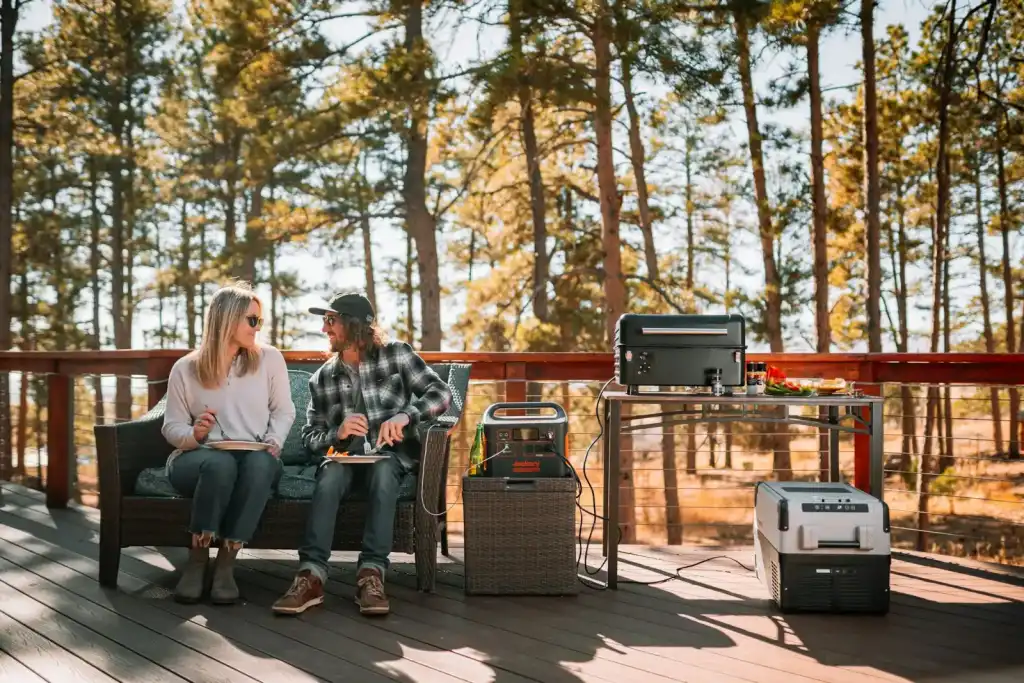
Photo: Jackery Power Station on Unsplash (Unsplash License).