E-bikes
Half of car trips are under 6 miles. An e-bike does them for pennies.
Disclosure: We may earn a commission if you buy through these links. It never changes our recommendations. How we make money.
0.2¢
Electricity per e-bike mile
At the US average 18.2¢ per kWh (our estimate)
17.3¢
Gas per car mile
AAA 2026; 86¢ a mile counting everything
51.7%
Of US car trips are under 6 miles
2022 National Household Travel Survey
Find the right e-bike for your ride
- Commuter e-bike under $1,500Racks, lights and fenders in the box
- E-bike for hillsTorque, mid-drives and torque sensors
- E-bike for heavy riders400 to 450 lb rated bikes
- Folding e-bikeFor apartments, RVs and trunks
Each guide compares only bikes whose specs we read on the maker's own site on November 2, 2026, and names a bike from another brand when it is the better pick. We have not ridden these bikes.
How to choose
Class 1, 2 and 3: where you can ride
| Class | Motor helps | Stops helping at |
|---|---|---|
| Class 1 | Only while you pedal | 20 mph |
| Class 2 | Throttle, with or without pedaling | 20 mph |
| Class 3 | Only while you pedal | 28 mph |
All three have a motor of no more than 750 W under the federal definition. More than 40 states use this three-class system (PeopleForBikes counted 43 in 2024), and each state decides where each class may ride. Class 3 often has extra rules: in California, for example, riders must be 16 or older and wear a helmet, and many local multi-use trails don't allow class 3. Many bikes let you set the top speed, so you can match your local rules. Check your state and city before you buy.
E-bike rebates in 2026
There is no federal e-bike tax credit.The E-BIKE Act (a 30% credit up to $1,500) never passed. These state and city programs are what's left, with their status as their official pages showed it on November 2, 2026:
| Where | Amount | Who qualifies | Status |
|---|---|---|---|
| ColoradoState e-bike discount | $225 off at participating shops in 2026 | Colorado residents, one a year, no income limit stated | Open (in law through 2032) |
| WashingtonWE-Bike rebate (WSDOT) | $300, or $1,200 if income-qualified | Residents 16 and older, chosen by monthly drawing | Applications open March 30, 2026 to March 29, 2027 |
| Portland, ORPortland Rides | Up to $1,600; up to $2,350 for a cargo bike | Portland residents 18 and older at or below 60% of area median income | Applications open year-round; new ones roll into 2027 |
| HawaiiHDOT e-bike rebate | The lesser of $500 or 20% of the price | 18 and older, in a low-income program, without a car, or a student | Page still live; 2026 funding not confirmed, check before you buy |
| DenverE-bike vouchers | $675 standard (2026) | Denver residents 16 and older, income limits | All 2026 vouchers claimed; waitlist |
| CaliforniaE-Bike Incentive Project (CARB) | Was up to $2,000 | Income-qualified Californians | Ended December 2025 |
| MassachusettsMassCEC e-bike vouchers | Income-based | Low- and moderate-income residents | Closed; not expected to reopen in 2026 |
| MinnesotaE-bike rebate | Was up to $750 | Income limits | Closed for good |
Programs change and run out of funds. Confirm on the program's own page before you buy; several pay only at participating shops. Your utility may run its own; our incentives pagelinks every state's energy programs.
Battery safety
Frequently asked questions
How much does it cost to charge an e-bike?
About 0.2 cents a mile at the US average home electricity price of 18.2 cents per kWh, using Efficiency Vermont's measured average of 1.02 kWh per 100 miles. A 10-mile round trip costs about 2 cents. Faster riding uses more, and a charger left plugged in all the time adds standby use.
Is there a federal tax credit for e-bikes?
No. The E-BIKE Act, which would have given a 30% credit up to $1,500, was introduced in 2021 and 2023 and never passed. Savings now come from state and city programs, such as Colorado's $225 discount at the register and Washington's $300 to $1,200 rebate.
What is the difference between class 1, 2 and 3 e-bikes?
Class 1 helps only while you pedal and stops at 20 mph. Class 2 has a throttle that can move the bike without pedaling, also up to 20 mph. Class 3 helps only while you pedal, up to 28 mph. All three have a motor of no more than 750 W under the federal definition. States set where each class can ride, so check yours.
How far can an e-bike go on a charge?
Makers quote 35 to 100 miles for the bikes we link to, usually at the lowest assist level with a light rider on flat ground. Hills, wind, a heavier load and higher assist all shorten it. Compare battery size in watt-hours (Wh) for a fairer picture: more Wh means more range on the same bike.
Are e-bike batteries safe?
Charging is the risky time: in the CPSC's 2017 to 2024 data, 62 of 106 e-bike fire incidents it looked at began while the bike was charging. Buy a bike whose electrical system is certified to UL 2849, use only the maker's charger, and be home and awake while it charges.
Cost per mile is our arithmetic from the sources below. Bike specs and prices are from makers' US websites on November 2, 2026; we have not ridden these bikes. Some bike links on the guides earn us a commission. See our disclaimer.
Sources
- Efficiency Vermont: Electric Bikes, Survey and Energy Efficiency Analysis (2018)
- AAA: Your Driving Costs 2026 fact sheet
- U.S. DOE Alternative Fuels Data Center: Share of U.S. vehicle trips by length (2022 NHTS)
- 36 CFR 1.4: e-bike classes (eCFR)
- 15 U.S.C. 2085: low-speed electric bicycles (Cornell LII)
- PeopleForBikes: 2024 policy wins (43 states use the three-class model)
- Town of Danville, CA: E-bike FAQ (California class 3 rules)
- Congress.gov: H.R. 1685, E-BIKE Act (118th Congress)
- CPSC: Micromobility information center
- CPSC: Micromobility deaths, injuries and hazard patterns 2017-2024 (April 2026)
- NYC Department of Consumer and Worker Protection: UL certification for e-bikes and batteries (2023)
- UL Standards & Engagement: UL 2849 and UL 2271 explained (2024)
- Federal Register: proposed safety standard for micromobility lithium-ion batteries (June 24, 2026)
- Colorado: State e-bike discount
- Washington: WE-Bike rebate (WSDOT)
- Portland, OR: Portland Rides
- Hawaii: HDOT e-bike rebate
- Denver: E-bike vouchers
- California: E-Bike Incentive Project (CARB)
- Massachusetts: MassCEC e-bike vouchers
- Minnesota: E-bike rebate
Keep going
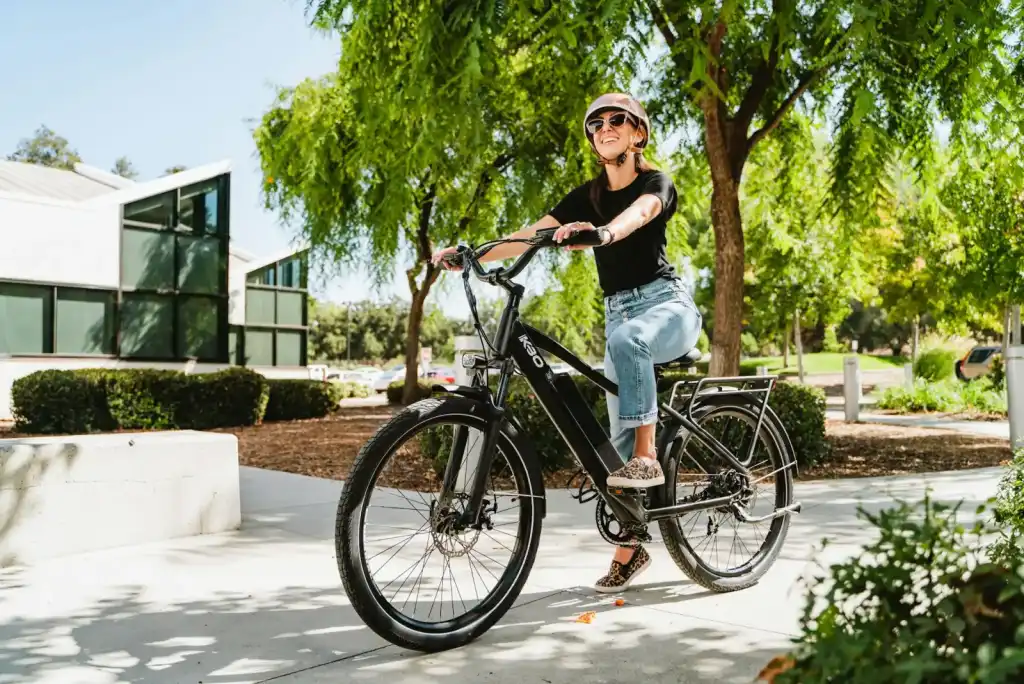
Photo: KBO Bike on Unsplash (Unsplash License).