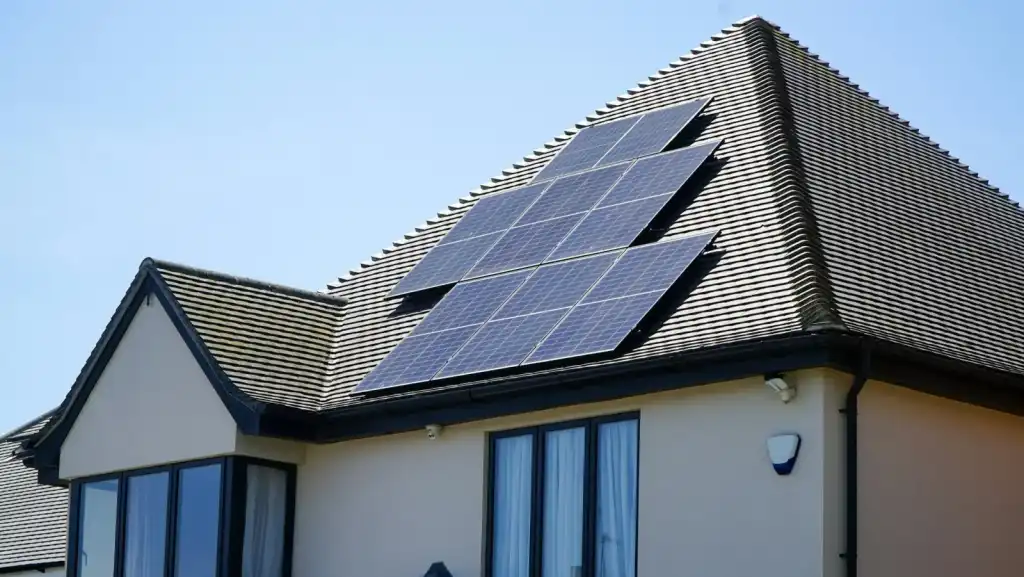
Off-grid solar in Connecticut
Connecticut off grid: size for December.
Solar data updated · All states
Size an off-grid system in Connecticut
Your use
2.7 kWh a day
Solar panels
1,450 W
About 4 × 400 W panels. In December, 1 kW of panels in Bridgeport makes about 1.90 kWh a day.
Battery bank
9.7 kWh
2.7 kWh × 3 days ÷ 85% usable.
Sized for December, the darkest month. The rest of the year you will have spare power. The US Department of Energy also advises a backup generator for long cloudy spells.
Kits you can buy for this in Connecticut
Complete kits from each brand's own store: the power station, batteries and that brand's own panels. One button puts every item in the brand's cart; you review and check out on their site. Prices checked Oct 26, 2026 and they change.
Disclosure: We may earn a commission if you buy through these links. It never changes our recommendations. How we make money.
- Recommended · Covers it for the least
Bluetti Apex 300 + B300K + 700 W solar
120/240 V home-style system you can grow to 19 kWh
What's in the cart
- 1 ×Apex 300 (2,764.8 Wh) + B300K battery (2,764.8 Wh) + two 350 W solar panels, Bluetti bundle (opens in a new tab)$3,698
- 2 ×BLUETTI B300K expansion battery for Apex 300 (2,764.8 Wh) (opens in a new tab)$2,158
Add a batteryBLUETTI B300K expansion battery for Apex 300 (2,764.8 Wh), $1,079 each. Up to 5 (Bluetti: the Apex 300 takes up to six B300K batteries).
- Battery: 3.4 days of your use
- Panels: 48% of December need
- Runs it all at once: yes
- 120/240 V
In December the panels make about 48% of a day's use; the battery covers the gap until it runs low.
Total, 3 items$5,85611 kWh battery · 700 W of panels
Add this kit to your cart at Bluetti (opens in a new tab)Opens Bluetti's own cart with all 3 items. You check out on their site. Prices checked Oct 26, 2026.
- Another brand that covers it
Jackery Explorer 5000 Plus + 1,000 W solar
120/240 V and 7,200 W output, for well pumps and home circuits
What's in the cart
- 1 ×Explorer 5000 Plus (5,040 Wh) + two SolarSaga 500 X panels, Jackery bundle (opens in a new tab)$4,639
- 1 ×Jackery Battery Pack 5000 Plus (5,040 Wh) (opens in a new tab)$2,599
Add a batteryJackery Battery Pack 5000 Plus (5,040 Wh), $2,599 each. Up to 1 (Jackery sells the 5000 Plus as a 10 kWh set with one Battery Pack 5000 Plus; we offer no more than that).
- Battery: 3.1 days of your use
- Panels: 69% of December need
- Runs it all at once: yes
- 120/240 V
In December the panels make about 69% of a day's use; the battery covers the gap until it runs low.
Total, 2 items$7,23810 kWh battery · 1,000 W of panels
Add this kit to your cart at Jackery (opens in a new tab)Opens Jackery's own cart with all 2 items. You check out on their site. Prices checked Oct 26, 2026.
Jackery's product description says up to 4,000 W input in its solar section.
- Another brand that covers it
EcoFlow DELTA Pro 3 + 2 Extra Batteries + 800 W solar
The DELTA Pro 3 at its full 12.3 kWh
What's in the cart
- 1 ×DELTA Pro 3 (4,096 Wh) + two Smart Extra Batteries (4,096 Wh each), EcoFlow bundle (opens in a new tab)$6,169
- 1 ×Two EcoFlow 400 W portable solar panels (2-pack) (opens in a new tab)$1,099
- Battery: 3.8 days of your use
- Panels: 55% of December need
- Runs it all at once: yes
- 120/240 V
In December the panels make about 55% of a day's use; the battery covers the gap until it runs low.
Total, 2 items$7,26812 kWh battery · 800 W of panels
Add this kit to your cart at EcoFlow (opens in a new tab)Opens EcoFlow's own cart with all 2 items. You check out on their site. Prices checked Oct 26, 2026.
Add all items to the cart at Bluetti: https://www.awin1.com/cread.php?awinmid=59271&awinaffid=3125360&ued=https%3A%2F%2Fwww.bluettipower.com%2Fcart%2F47354165887195%3A1%2C47262756896987%3A2%3Fstorefront%3Dtrue
Solar output through the year near Bridgeport
| Jan | 67 kWh |
|---|---|
| Feb | 82 kWh |
| Mar | 117 kWh |
| Apr | 120 kWh |
| May | 138 kWh |
| Jun | 138 kWh |
| Jul | 138 kWh |
| Aug | 132 kWh |
| Sep | 113 kWh |
| Oct | 96 kWh |
| Nov | 79 kWh |
| Dec | 59 kWh |
December gives 59 kWh per kW for the month; June gives 138. A system sized for June would fall short every winter.
Cabin and home sizes in Connecticut
| Use | A day | Panels | Battery (3 days) |
|---|---|---|---|
| Weekend cabinLights, phones and a 12 V compressor cooler instead of a fridge | 492 Wh | 260 W | 1.7 kWh |
| Part-time cabinA full-size fridge, Wi-Fi, lights, a laptop and a TV | 3.7 kWh | 1,930 W | 13 kWh |
| Full-time homeFridge, freezer, well pump, furnace blower, microwave and the rest | 11 kWh | 5,710 W | 38 kWh |
See which kits fit each size, or what going off grid costs.
These sizes assume panels at a 20 degree tilt. A steeper tilt, which also sheds snow, catches more low winter sun, and many off-grid homes in the far north run a generator for the darkest weeks rather than buying panels for December alone.
Similar winter sun
Frequently asked questions
How much solar do I need to live off grid in Connecticut?
Size for December. Near Bridgeport, 1 kW of panels makes about 1.90 kWh a day in December in the PVWatts model. A fridge, Wi-Fi, four LED bulbs and two phone charges (2.7 kWh a day) need about 1,450 W of panels and a 9.7 kWh lithium battery for 3 days with little sun. A full-time home with a freezer, well pump and furnace blower needs about 5,710 W and 38 kWh.
Is Connecticut good for off-grid solar in winter?
Connecticut ranks 39th of 51 states and DC for December solar output in our model, 14% less than the middle state. December output is 41% of June, the best month here, so a system sized for winter has plenty of spare power in summer.
How big a battery bank do I need off grid in Connecticut?
Battery size depends on use, not on sun: daily watt-hours × days of storage ÷ the usable share (85% for lithium). For 2.7 kWh a day and 3 days, that is 9.7 kWh. The US Department of Energy advises sizing for cloudy stretches and keeping a backup generator.
Why does winter matter so much for off-grid solar in Connecticut?
Short days and low sun. To cover the same 2.7 kWh a day, panels near Bridgeport would need only about 600 W in June but 1,450 W in December. Off grid, there is no utility to cover the gap, so the winter number is the one to buy.
Estimates only. Output is modeled near Bridgeport; mountains, coast, shade and snow change it. Size a real system with an installer or an off-grid supplier before you buy. See our disclaimer.
Sources
- PVWatts v8 solar model (National Laboratory of the Rockies, formerly NREL, run via its PySAM package) on NASA POWER hourly weather — monthly output per kW by state, average of 2015-2024 hourly weather; 1 kW DC fixed roof mount, 20 degree tilt, facing south (180 degrees), standard module, 14% system losses, 96% inverter efficiency, DC/AC ratio 1.2 (PVWatts defaults except tilt). Checked against the PVWatts web API for eight states: within 8%, 3% on average.
- PVWatts v8 API documentation (National Laboratory of the Rockies) — monthly AC output; 14% system losses
- US DOE Energy Saver, Estimating appliance and home electronic energy use (archived copy) — watts × hours a day ÷ 1,000 = kWh a day
- US DOE Energy Saver, Balance-of-system equipment for renewable energy systems (archived copy) — balance-of-system equipment (batteries, controllers, inverters, wiring) could be half of a stand-alone system's cost; size batteries for cloudy weather, with a backup generator
- EIA Residential Energy Consumption Survey 2020, table CE4.6.EL.ST — refrigerators: 839 kWh a year per household
- EIA Residential Energy Consumption Survey 2020, table CE5.3b (detailed electricity end use) — separate freezers 570 kWh, most-used TV 210 kWh, microwaves 107 kWh a year per household
- Eugene Water & Electric Board, Generator sizing considerations — running and starting watts: well pump 1/3 HP 1,000 W (+2,000 W to start), furnace fan blower 1/3 HP 700 W (+1,400), refrigerator/freezer 700 W (+2,200), microwave 1,000 W, laptop 60 W, phone charger 20 W
- US DOE Energy Saver, Energy efficient lighting fact sheet (2021) — a 1,100-lumen LED screw-in bulb uses as little as 9 W
- EnergySage, How many watts does a Wi-Fi router use? — 5 to 20 W; we use 10 W
- TidBITS, iPhone battery-life tables — iPhone 16 battery 13.84 Wh; we use 15 Wh a charge to allow for charging losses
- ResMed battery guide (AirSense 10) — 28 W with heated humidifier, about 11 W without
- Dometic CFX3 35 specifications — 0.98 Ah an hour at 12 V on a 90°F day
- Renogy Deep Cycle AGM Battery 12V 100Ah product page — rated at 50% depth of discharge
Keep going
- Off-grid solar calculatorAll 50 states and DC compared
- Cabin solar kit sizeWeekend, part-time or full-time
- Power outage backup calculatorKeep the essentials on through an outage
- Generator runtime and fuelBackup for the darkest weeks
- Connecticut energy dataElectricity prices and grid-tied solar
- Emergency water storageGallons to store for your household
Photo: Watt A Lot on Unsplash (Unsplash License).